
NIST AI RMF Compliance
Manage AI risks with the NIST AI Risk Management Framework
Evidr automates NIST AI RMF implementation with structured governance, risk mapping, and continuous monitoring. Build trustworthy AI systems with documented controls across the entire AI lifecycle.
Inside the product
NIST AI RMF in the console, control by control.
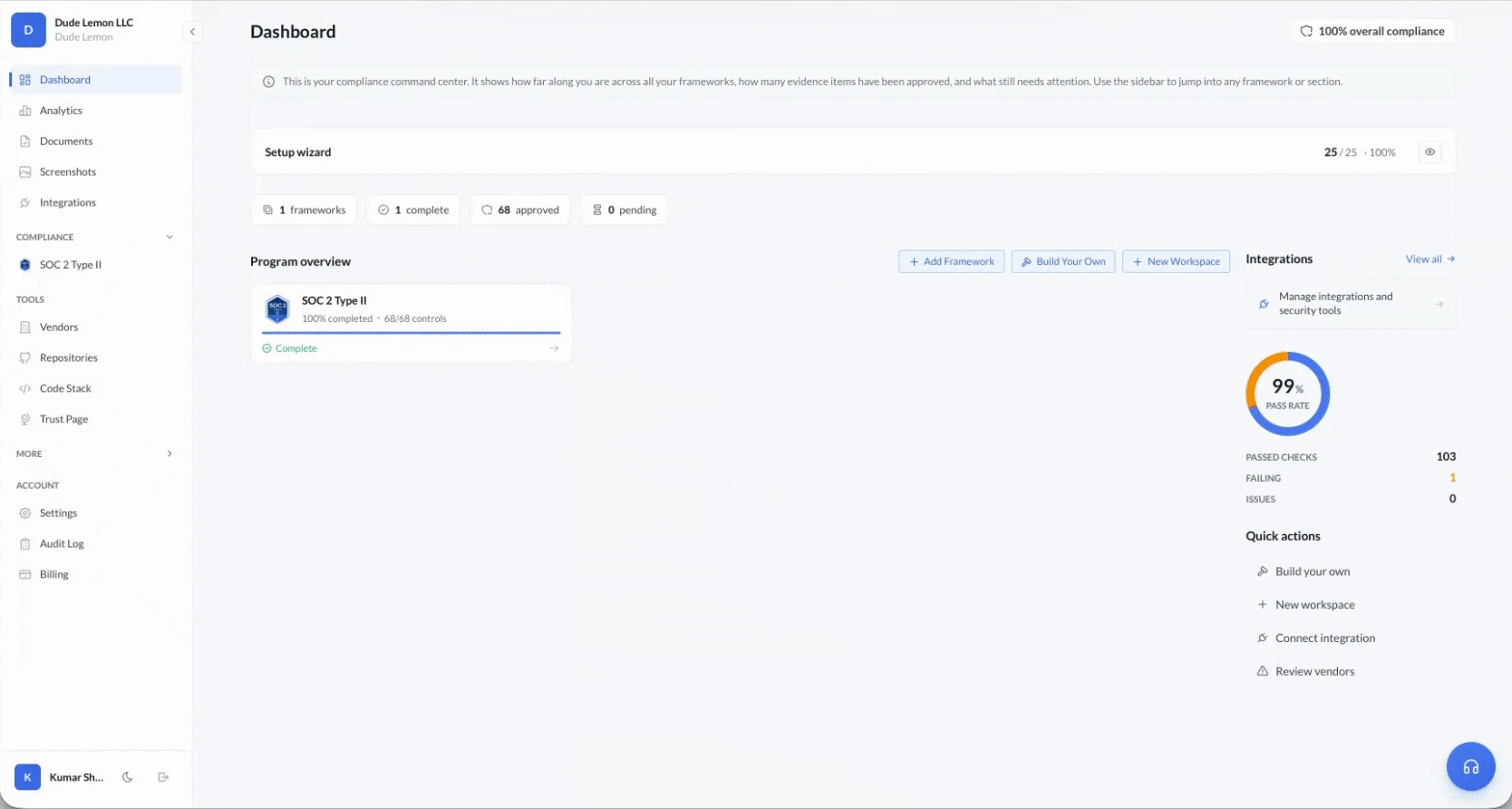
01NIST AI RMF
Four core functions
Govern, Map, Measure and Manage, the loop the framework is built on.
- 016 categories
GOVERN
Culture, governance structures, policies, processes, procedures, and practices
- 025 categories
MAP
Context, requirements, stakeholders, system characteristics, and risk identification
- 034 categories
MEASURE
Appropriate methods, metrics, tracking, and third-party assessments
- 044 categories
MANAGE
Risk prioritization, treatment, resource allocation, and continuous improvement
02NIST AI RMF
Seven characteristics of trustworthy AI
What the framework measures a system against.
- Valid & ReliableAI systems perform as intended under expected conditions
- SafeAI systems do not create unsafe conditions for people
- Secure & ResilientAI systems resist unauthorized access and recover from disruptions
- Accountable & TransparentAI system decisions can be explained and responsibility assigned
- Explainable & InterpretableAI system outputs can be understood by stakeholders
- Privacy-EnhancedAI systems protect individual privacy and data rights
- Fair (Bias Managed)AI systems minimize harmful bias and promote equitable outcomes
03What Evidr does
Everything NIST AI RMF asks for, handled.
- 01
GOVERN Function
Establish AI governance structures, policies, and organizational culture. Define roles, responsibilities, and accountability for AI risk management across your organization.
- 02
MAP Function
Understand context and categorize AI system risks. Document AI system purposes, stakeholders, potential impacts, and risk tolerance levels before deployment.
- 03
MEASURE Function
Employ quantitative and qualitative methods to analyze AI risks. Assess AI system trustworthiness characteristics including accuracy, fairness, and explainability.
- 04
MANAGE Function
Allocate resources and implement plans to respond to AI risks. Prioritize risk treatment options and implement continuous monitoring and improvement processes.
- 05
Lifecycle Coverage
Apply risk management across the full AI lifecycle: design, development, deployment, operation, and decommissioning. Maintain documentation at every stage.
- 06
Documentation & Reporting
Generate comprehensive AI governance documentation including risk assessments, impact analyses, and audit trails for stakeholder and regulatory reporting.
04The path
NIST AI RMF readiness, step by step.
- 01Week 1-2
AI System Inventory
Catalog all AI systems in your organization. Document purposes, data sources, stakeholders, and deployment contexts for each system.
- 02Week 2-4
Governance Framework
Establish AI governance structures, policies, and accountability. Define roles for AI risk oversight and create decision-making processes.
- 03Week 4-6
Risk Mapping
For each AI system, identify and categorize risks across trustworthiness characteristics. Document potential impacts on individuals and communities.
- 04Week 6-10
Measurement & Assessment
Implement metrics and methods to assess AI risks. Conduct bias audits, accuracy testing, and impact assessments across system lifecycle.
- 05Week 10-12
Risk Treatment & Monitoring
Prioritize and address identified risks. Implement continuous monitoring, incident response procedures, and improvement processes.
05Questions
NIST AI RMF, answered.
Related
Often paired with NIST AI RMF.
Ready for NIST AI RMF?
Start on the free Starter plan, or talk to us and see NIST AI RMF set up on your own stack.