
EU AI Act Compliance
Navigate the world's first comprehensive AI regulation
Evidr automates EU AI Act compliance with risk classification, conformity assessments, and technical documentation management. Prepare for phased deadlines starting February 2025 and avoid penalties up to 7% of global turnover.
- Controls and evidence requirements mapped in advance
- Every upload read and scored by the AI reviewer
- Policies, monitoring and the auditor portal included
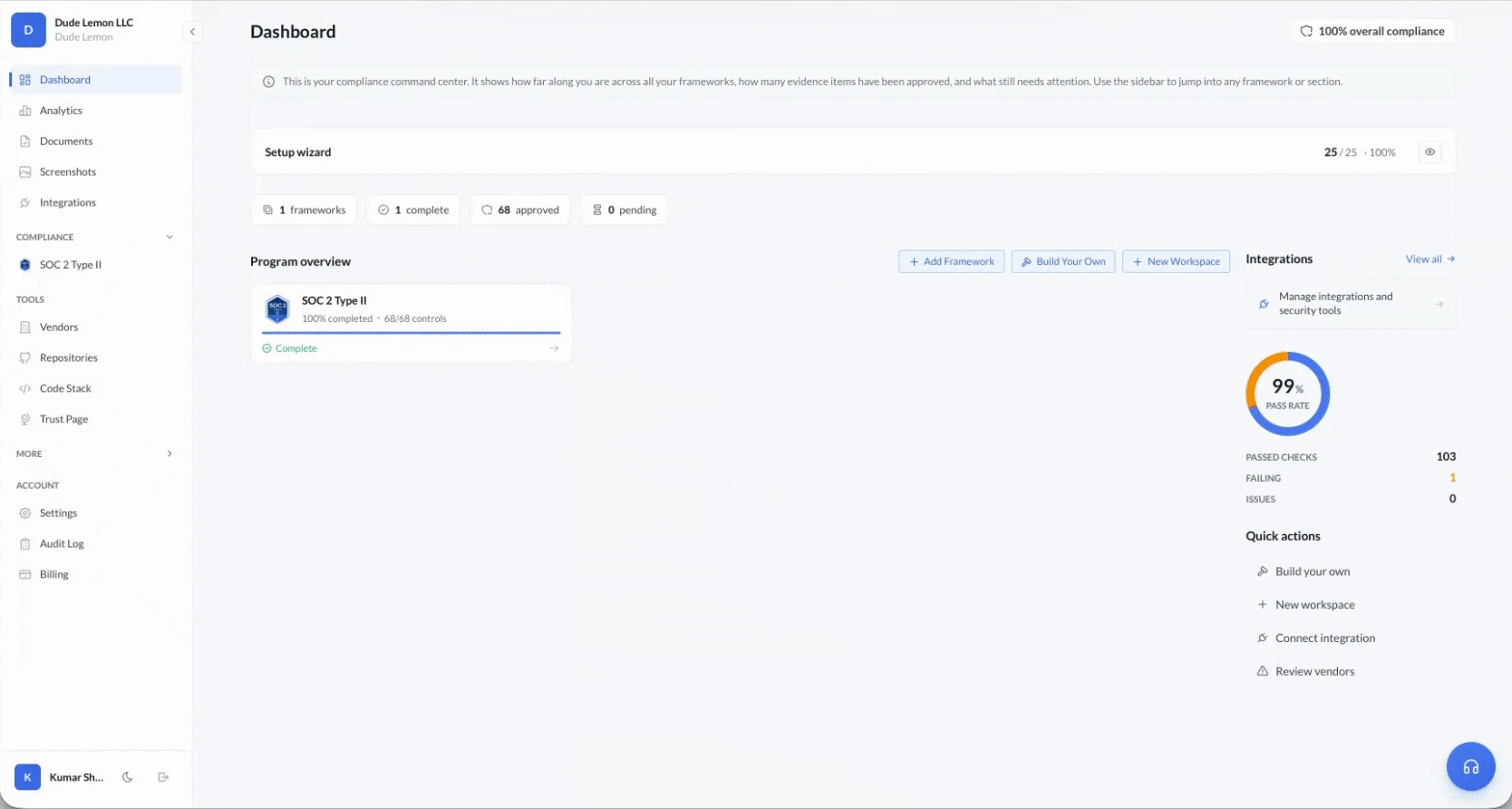
Inside the product
EU AI Act in the console, control by control.
01EU AI Act
Four risk tiers
Obligations scale with risk. Most of the Act is written for the high-risk tier.
- 01Banned from the EU market
Unacceptable Risk
Prohibited AI practices that pose clear threats to safety, livelihoods, or rights
- Social scoring by governments
- Real-time remote biometric ID in public spaces
- Emotion recognition in workplace/education
- Subliminal manipulation techniques
- 02Strict compliance requirements
High Risk
AI systems that significantly impact safety, fundamental rights, or critical decisions
- Critical infrastructure management
- Educational scoring and access
- Employment and recruitment
- Credit scoring and insurance
- Law enforcement tools
- 03Transparency obligations
Limited Risk
AI systems with specific transparency obligations
- Chatbots and virtual assistants
- Emotion recognition systems
- Deepfake generation
- AI-generated content
- 04No specific requirements
Minimal Risk
AI systems with no specific regulatory requirements
- Spam filters
- AI-enabled video games
- Inventory management
- Content recommendations
02EU AI Act
High-risk obligations
What Articles 9 to 15 ask of a provider of a high-risk system.
- Risk Management SystemEstablish and maintain a risk management system throughout the AI system lifecycle
- Data GovernanceEnsure training, validation, and testing data meets quality criteria and is representative
- Technical DocumentationDraw up comprehensive technical documentation before placing system on market
- Record-KeepingEnable automatic recording of events (logs) throughout system operation
- TransparencyProvide clear information to deployers about system capabilities and limitations
- Human OversightDesign systems to be effectively overseen by natural persons
- Accuracy & RobustnessAchieve appropriate levels of accuracy, robustness, and cybersecurity
- Conformity AssessmentUndergo conformity assessment before placing on market or putting into service
03EU AI Act
Deadlines
The Act applies in stages.
- February 2025Prohibited AI PracticesAI systems with unacceptable risk must be removed from the EU market
- August 2025General-Purpose AI (GPAI)GPAI model providers must comply with transparency and documentation requirements
- August 2026High-Risk AI SystemsFull compliance required for high-risk AI systems in Annex III categories
- August 2027Embedded High-Risk AICompliance deadline for high-risk AI embedded in regulated products
04What Evidr does
Everything EU AI Act asks for, handled.
- 01
AI Risk Classification
Automatically assess and classify your AI systems against EU AI Act risk categories. Determine if your systems are prohibited, high-risk, limited risk, or minimal risk.
- 02
Conformity Assessments
Conduct and document conformity assessments for high-risk AI systems. Generate technical documentation and compliance declarations for notified bodies.
- 03
Technical Documentation
Maintain comprehensive technical documentation including system design, training data, testing results, and performance metrics required by the regulation.
- 04
Post-Market Monitoring
Implement continuous monitoring systems to track AI performance, detect drift, and report serious incidents to authorities within required timeframes.
- 05
Transparency Requirements
Meet transparency obligations with automated disclosures for AI-generated content, emotion recognition systems, and biometric categorization.
- 06
Audit Trail Management
Maintain immutable audit logs of AI system decisions, model updates, and compliance activities. Demonstrate accountability to regulators and auditors.
05The path
EU AI Act readiness, step by step.
- 01Month 1-2
AI Inventory & Classification
Catalog all AI systems in your organization. Classify each system according to EU AI Act risk categories and identify prohibited practices that must be discontinued.
- 02Month 2-3
Gap Analysis & Risk Assessment
Assess high-risk systems against regulatory requirements. Identify compliance gaps in data governance, documentation, human oversight, and technical safeguards.
- 03Month 3-5
Documentation & Governance
Establish technical documentation frameworks. Implement risk management systems, data quality processes, and governance structures for AI oversight.
- 04Month 5-7
Conformity Assessment Preparation
Prepare conformity assessment documentation. Conduct internal assessments and engage notified bodies where required for specific high-risk categories.
- 05Month 7+
Monitoring & Continuous Compliance
Implement post-market monitoring systems. Establish incident reporting procedures, regular audits, and ongoing compliance verification processes.
06Questions
EU AI Act, answered.
Related
Often paired with EU AI Act.
Ready for EU AI Act?
Start on the free Starter plan, or talk to us and see EU AI Act set up on your own stack.