
PCI DSS Compliance
Achieve PCI DSS 4.0 compliance with automation
Meet all 12 PCI DSS requirements with automated evidence collection, continuous monitoring, and AI-powered control mapping. Get audit-ready for SAQ or QSA assessment faster than ever.
Inside the product
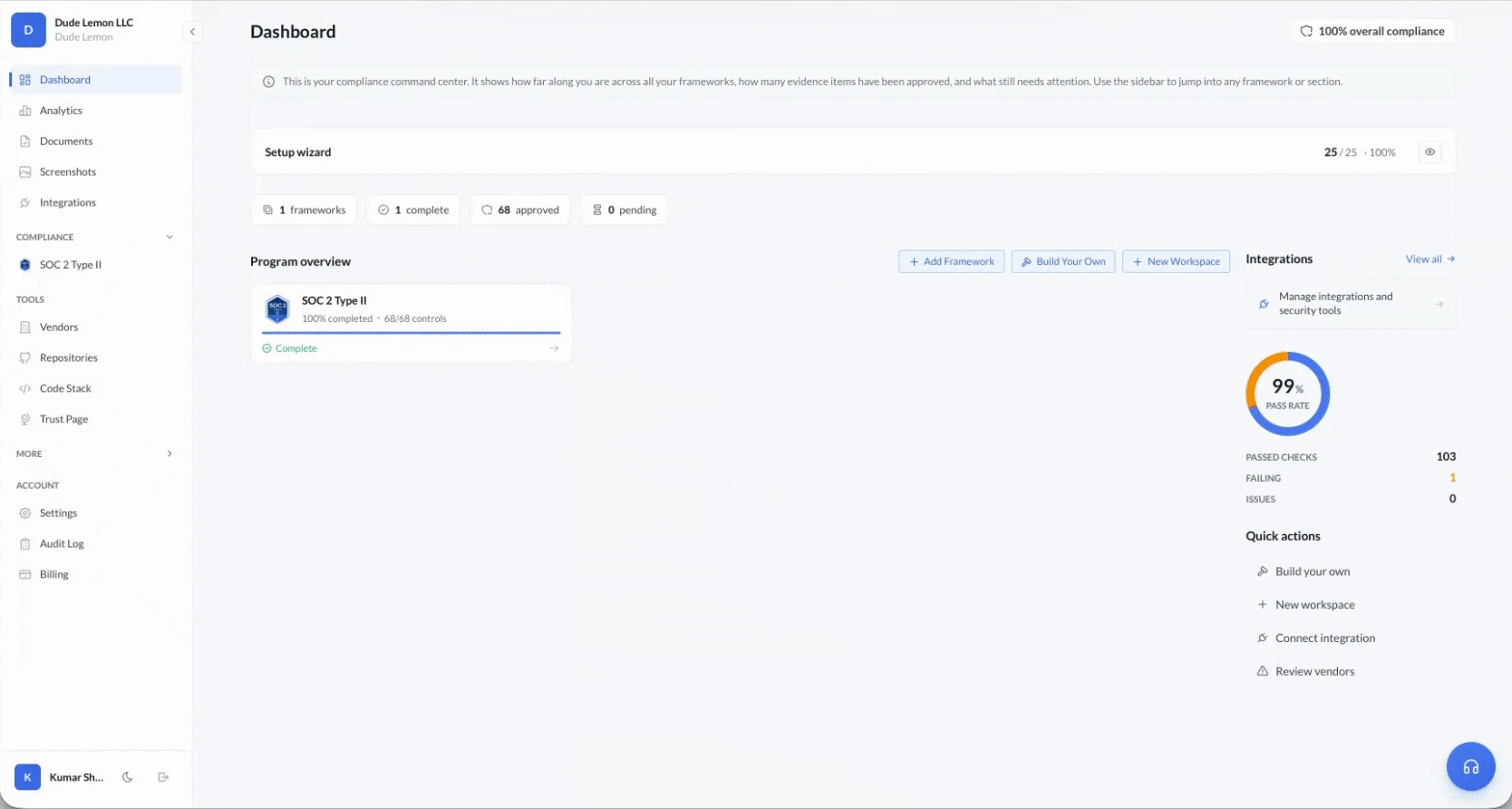
PCI DSS in the console, control by control.
01PCI DSS
The twelve requirements
Six control objectives, twelve requirements, each mapped to the controls Evidr tracks.
- Req 1Network Security ControlsInstall and maintain network security controls to protect cardholder data.23 controls
- Req 2Secure ConfigurationsApply secure configurations to all system components.18 controls
- Req 3Protect Stored DataProtect stored account data with encryption and key management.21 controls
- Req 4Protect Data in TransitProtect cardholder data with strong cryptography during transmission.8 controls
- Req 5Anti-Malware ProtectionProtect all systems and networks from malicious software.12 controls
- Req 6Secure DevelopmentDevelop and maintain secure systems and software.27 controls
- Req 7Access RestrictionRestrict access to cardholder data by business need to know.9 controls
- Req 8User AuthenticationIdentify users and authenticate access to system components.24 controls
- Req 9Physical SecurityRestrict physical access to cardholder data.14 controls
- Req 10Logging & MonitoringLog and monitor all access to network resources and cardholder data.19 controls
- Req 11Security TestingTest security of systems and networks regularly.22 controls
- Req 12Security PoliciesSupport information security with organizational policies and programs.16 controls
02What Evidr does
Everything PCI DSS asks for, handled.
- 01
Network Security Controls
Automated evidence collection for firewalls, network segmentation, and access control lists. Verify cardholder data environment isolation.
- 02
Data Encryption Monitoring
Track encryption standards across storage and transmission. Monitor for strong cryptography (TLS 1.2+, AES-256) on all cardholder data.
- 03
Continuous Logging & Monitoring
Collect evidence from SIEM, CloudTrail, and log aggregation tools. Demonstrate 24/7 monitoring of cardholder data access.
- 04
Access Control Evidence
Pull access reviews, role-based permissions, and authentication logs from Okta, Azure AD, and other IAM systems.
- 05
Vulnerability & Pen Test Tracking
Import vulnerability scans and penetration test reports. Track remediation timelines and recurring assessment schedules.
- 06
Security Policy Generation
Generate PCI DSS-aligned security policies covering all 12 requirements. Customize templates to your cardholder data environment.
03The path
PCI DSS readiness, step by step.
- 01Day 1-3
Scope Definition
AI-guided assessment of your cardholder data environment. Identify all systems that store, process, or transmit card data.
- 02Week 1
Gap Analysis
Map current security controls to PCI DSS 4.0 requirements. Identify gaps across all 12 requirement areas.
- 03Week 2-4
Control Implementation
Address gaps with guided remediation. Generate policies and implement missing technical controls.
- 04Week 4-6
Evidence Collection
Pull evidence from connected integrations. AI reviews each piece with confidence scoring.
- 05Week 6-8
Assessment Readiness
Internal review and QSA preparation. Package evidence for SAQ or ROC assessment.
04Questions
PCI DSS, answered.
Related
Often paired with PCI DSS.
Ready for PCI DSS?
Start on the free Starter plan, or talk to us and see PCI DSS set up on your own stack.