ISO 42001 AI Management

Achieve ISO 42001 certification for responsible AI governance

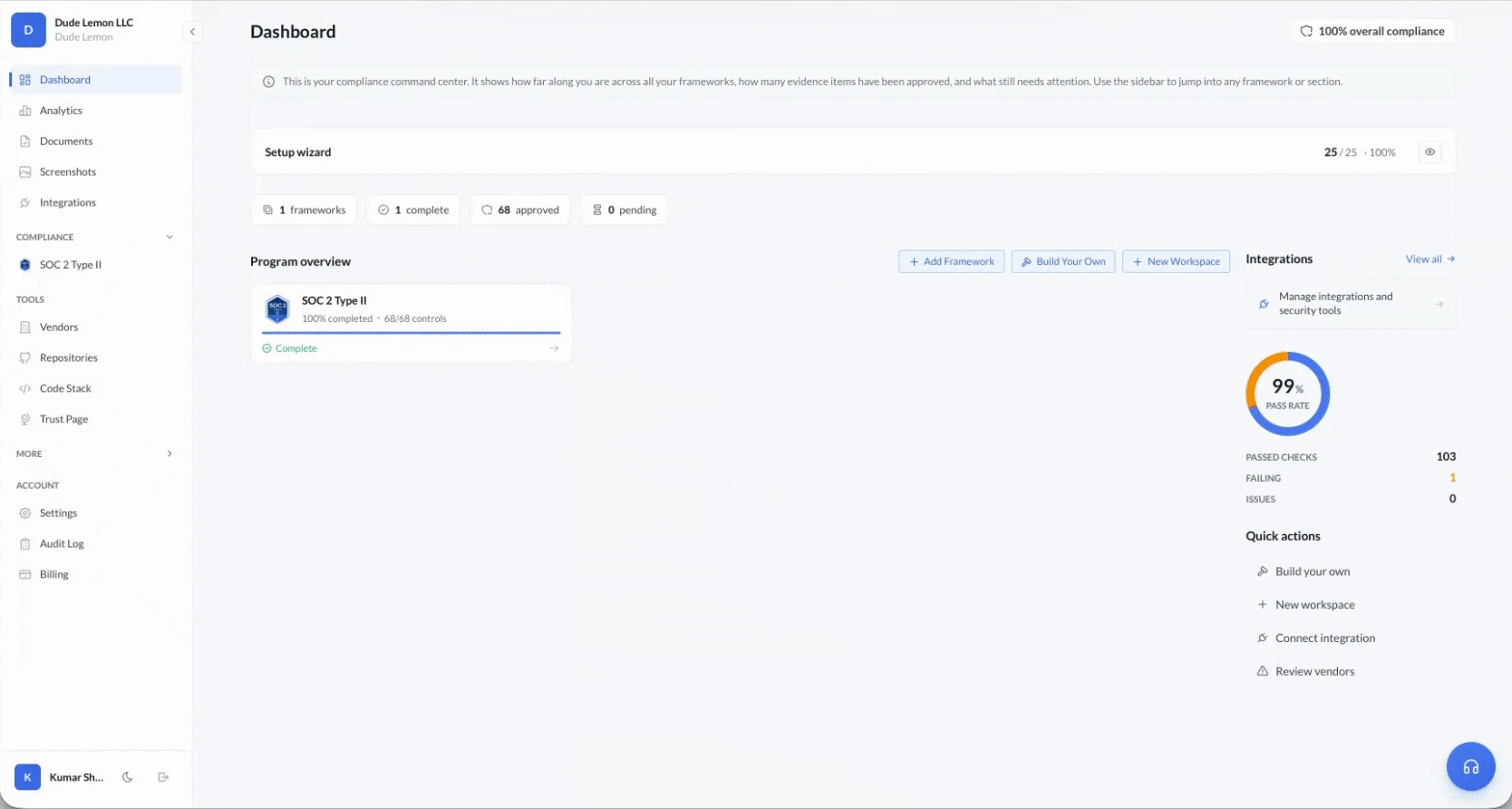
Evidr automates AI risk assessment, lifecycle management, and compliance monitoring. Build trust with customers and regulators through certified responsible AI practices.

Built by the same team that builds platforms for

GoogleAWSBMWPhilips
2023
Standard published
117
Annex A controls
40%
Faster preparation
3yr
Certification validity

AI System Lifecycle Phases

ISO 42001 requires governance across the entire AI lifecycle. Evidr provides controls, evidence templates, and monitoring for each phase of your AI system's journey.

Design & Planning14 controls
Define AI system objectives, scope, and requirements. Assess intended use cases and potential impacts.
Phase 1
Development & Training22 controlsMost Complex
Build and train AI models with documented data governance, model selection, and testing protocols.
Phase 2
Deployment & Operation18 controls
Deploy AI systems with monitoring, human oversight, and incident response procedures in place.
Phase 3
Monitoring & Review12 controls
Continuously monitor performance, bias, and compliance. Conduct periodic reviews and updates.
Phase 4
AI System Assessment78% Ready
AI Governance Policy - Complete
Risk Assessment - 12/14 systems
Bias Testing - 8/14 systems
Explainability Docs - 6/14 systems
Controls Implemented92/117

Everything you need for ISO 42001 certification

From AI inventory to continuous monitoring, Evidr automates the complexity of AI governance so you can innovate responsibly.

AI Governance Framework

Establish comprehensive AI governance policies, roles, and responsibilities. Define accountability structures for AI system decisions and outcomes.

AI Risk Assessment

Systematically identify, analyze, and mitigate AI-specific risks including bias, safety, security, and societal impact. Continuous risk monitoring throughout the AI lifecycle.

AI Lifecycle Management

Manage AI systems from design through deployment and decommissioning. Track model versions, training data, and system changes with full traceability.

Transparency & Explainability

Document AI system capabilities, limitations, and decision-making processes. Generate explainability reports for stakeholders and regulators.

Bias Detection & Mitigation

Implement fairness testing across protected attributes. Monitor for bias drift and document mitigation measures with evidence trails.

Continuous AI Monitoring

Real-time monitoring of AI system performance, accuracy, and drift. Automated alerts for anomalies and compliance deviations.

ISO 42001 and EU AI Act compliance

ISO 42001 certification helps demonstrate compliance with emerging AI regulations including the EU AI Act.

Risk Classification
ISO 42001 risk assessment aligns with EU AI Act risk categories (minimal, limited, high, unacceptable).
Quality Management
Management system requirements satisfy EU AI Act Article 17 quality management obligations.
Technical Documentation
ISO 42001 documentation requirements help meet EU AI Act Annex IV technical documentation mandates.
Human Oversight
Governance controls address EU AI Act Article 14 human oversight requirements for high-risk systems.
EU AI Act Mapping68 Controls
Article 9 - Risk Management
Article 10 - Data Governance
Article 13 - Transparency
Article 17 - Quality Management

Manual vs. automated AI governance

Without Evidr
12-18 months to certification
Track AI systems in spreadsheets
Manual bias testing and documentation
Disconnected from ISO 27001 controls
Point-in-time compliance snapshots
No visibility into AI model changes
With Evidr
6-9 months to certification
Centralized AI system inventory
Automated fairness testing workflows
Integrated with ISO 27001 controls
Continuous compliance monitoring
AI model version tracking and alerts

ISO 42001 certification roadmap

Follow our proven process to achieve ISO 42001 certification with confidence and efficiency.

1

AI System Inventory

Catalog all AI systems, their purposes, and risk classifications. Map data flows, dependencies, and stakeholders across your AI portfolio.

Week 1-3
2

Gap Analysis & Risk Assessment

Assess current AI governance against ISO 42001 requirements. Identify gaps in policies, controls, and documentation. Prioritize high-risk AI systems.

Week 3-6
3

AIMS Implementation

Establish AI Management System policies, procedures, and controls. Implement governance structures, roles, and accountability frameworks.

Week 6-16
4

Control Implementation

Deploy technical and operational controls for AI risk management, monitoring, transparency, and human oversight. Document evidence of implementation.

Week 16-24
5

Internal Audit & Certification

Conduct internal audit to validate AIMS effectiveness. Engage accredited certification body for external assessment and certification.

Week 24-32

Frequently asked questions about ISO 42001

What is ISO 42001?

ISO/IEC 42001:2023 is the first international standard for Artificial Intelligence Management Systems (AIMS). Published in December 2023, it provides a framework for organizations to establish, implement, maintain, and continuously improve their AI management system. The standard addresses responsible development, deployment, and operation of AI systems, covering governance, risk management, transparency, and ethical considerations.

Who needs ISO 42001 certification?

ISO 42001 certification benefits any organization that develops, deploys, or operates AI systems. This includes technology companies building AI products, healthcare organizations using AI diagnostics, financial institutions with AI-driven decision systems, manufacturers with automated processes, and government agencies deploying AI services. Certification demonstrates responsible AI governance to customers, regulators, and stakeholders.

How does ISO 42001 relate to the EU AI Act?

ISO 42001 provides a management system framework that complements the EU AI Act regulatory requirements. While the EU AI Act establishes legal obligations for AI systems in the European market (including risk classification, conformity assessment, and prohibited uses), ISO 42001 provides the operational framework to implement governance controls. Organizations can use ISO 42001 to demonstrate systematic compliance with many EU AI Act requirements.

What is the difference between ISO 42001 and ISO 27001?

ISO 27001 focuses on Information Security Management Systems, protecting data confidentiality, integrity, and availability. ISO 42001 specifically addresses AI system governance, including unique AI risks like algorithmic bias, lack of transparency, unintended behaviors, and ethical considerations. The standards are complementary and share a similar Annex SL structure, making integrated implementation efficient for organizations with existing ISO 27001 certification.

How long does ISO 42001 certification take?

Certification timeline varies based on organizational maturity and AI system complexity. Most organizations achieve certification in 6-12 months. Organizations with existing ISO management system certifications (27001, 9001) can leverage existing processes and may certify faster. With Evidr, preparation time can be reduced by 40-50% through automated control mapping and AI-powered evidence collection.

What are the main clauses of ISO 42001?

ISO 42001 follows the harmonized Annex SL structure: Clause 4 (Context), Clause 5 (Leadership), Clause 6 (Planning), Clause 7 (Support), Clause 8 (Operation), Clause 9 (Performance Evaluation), and Clause 10 (Improvement). Additionally, Annex A provides specific controls for AI management including policies, impact assessment, AI lifecycle, data management, transparency, and third-party relationships.

How does ISO 42001 address AI bias and fairness?

ISO 42001 requires organizations to assess AI system impacts, including potential biases and unfair outcomes. The standard mandates documentation of data sources, model training processes, and testing for bias across protected attributes. Organizations must implement monitoring for bias drift over time and establish procedures for bias mitigation when detected. Evidence of fairness testing becomes part of the compliance record.

Can ISO 42001 be integrated with other management systems?

Yes, ISO 42001 uses the harmonized Annex SL structure shared by ISO 27001, ISO 9001, ISO 14001, and other management system standards. This enables efficient integrated management systems where common elements (leadership, planning, support, improvement) are shared across certifications. Organizations often implement ISO 42001 alongside ISO 27001 for comprehensive AI and information security governance.

Often paired with ISO 42001

ISO 42001 integrates seamlessly with existing management systems. Evidr supports unified compliance across all your certifications.

Ready to certify your AI governance?

Schedule a demo with our compliance team. We will walk you through AI system inventory, automated risk assessment, and ISO 42001 certification preparation.