
HIPAA compliance checklist
The requirements of the HIPAA Privacy, Security and Breach Notification Rules as a checklist for covered entities and business associates. Tick off each item as you go.
The three HIPAA rules at a glance
| Rule | What it covers | Applies to |
|---|---|---|
| Privacy Rule | How PHI may be used and disclosed, and patients' rights over their records | Covered entities, and business associates through their agreements |
| Security Rule | Administrative, physical and technical safeguards for electronic PHI | Covered entities and business associates |
| Breach Notification Rule | Notifying individuals, HHS and sometimes the media after a breach of unsecured PHI | Covered entities; business associates must notify the covered entity |
HIPAA compliance checklist
Tick off each requirement. Your progress is saved in this browser.
Getting started
Security Rule: administrative safeguards
Security Rule: physical safeguards
Security Rule: technical safeguards
Privacy Rule
Breach Notification Rule
Documentation
Where to start
Start with the risk analysis: it tells you which safeguards matter most for your systems. Use the risk assessment template and the 5x5 risk matrix, then check every vendor that touches PHI with the vendor risk assessment questionnaire.
This checklist summarizes the HIPAA rules for planning purposes. It is not legal advice; read the regulations at 45 CFR Parts 160 and 164 and consult counsel for your situation.
HIPAA compliance in Evidr
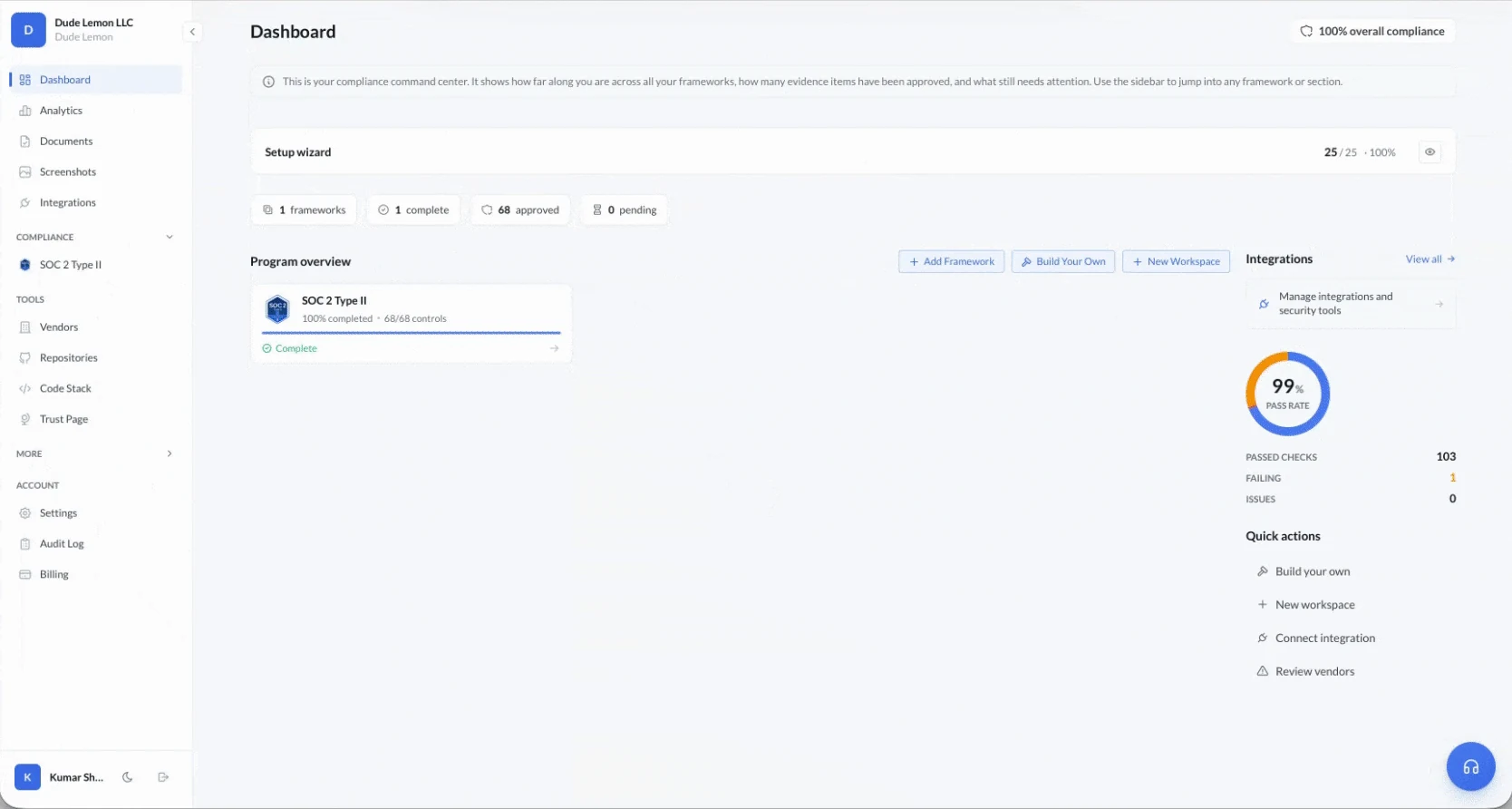
Evidr maps your controls to HIPAA, collects evidence from your systems, writes the policies the Security Rule expects and keeps a risk register for your risk analysis, so you can show your safeguards to customers and auditors. See HIPAA compliance with Evidr.
What are the main HIPAA rules?
The Privacy Rule sets limits on how protected health information may be used and disclosed and gives patients rights over it. The Security Rule requires administrative, physical and technical safeguards for electronic PHI. The Breach Notification Rule sets out who must be notified after a breach and when.
Who needs to comply with HIPAA?
Covered entities (health plans, healthcare clearinghouses and healthcare providers who conduct certain transactions electronically) and their business associates, meaning vendors and contractors that create, receive, keep or send PHI on their behalf, including many software companies.
Is there an official HIPAA certification?
No. HHS does not certify organizations as HIPAA compliant. Companies show compliance through their risk analysis, policies, safeguards and documentation, and often through an independent assessment such as a SOC 2 report that includes HIPAA requirements or a HITRUST certification.
What is a HIPAA risk analysis?
The Security Rule requires an accurate and thorough assessment of the potential risks and vulnerabilities to the confidentiality, integrity and availability of electronic PHI. It is the foundation of HIPAA security compliance and one of the most frequently cited gaps in HHS enforcement. The risk assessment template on this site is a good place to start.
Is the HIPAA Security Rule changing?
In January 2025, HHS published a proposed rule to update the Security Rule, including stricter requirements for encryption, multi-factor authentication and asset inventories. Check the current status on the HHS website before you plan around it.
What happens if you are not HIPAA compliant?
HHS can impose civil money penalties that rise with the level of negligence, and serious violations can lead to criminal charges. Breaches can also bring state attorney general action, lawsuits and lost customers.
More free tools
All free tools- Calculator5x5 risk matrixScore likelihood and impact, see the risk level and plot your risks on a heat map.Open
- TemplateRisk register templateA risk register with owners, scores, treatment and residual risk, exported to CSV.Open
- TemplateRisk assessment templateIdentify assets and threats, score each risk and record the controls that reduce it.Open
- QuestionnaireVendor risk assessment questionnaireSecurity questions to send to suppliers, with a score for their answers.Open
- TemplateIncident response plan templateFill in roles, contacts and steps for each phase, then download your plan.Open
- TemplateBusiness continuity plan templateCritical processes, recovery times, contacts and recovery steps in one plan.Open